
Common Types of Truck Accidents
In one recent year, nearly 5,000 people died, and 147,000 more suffered injuries in large truck crashes nationally. That’s according to the Federal Motor Carrier Safety Administration (FMCSA), which annually collects and reports crash data on commercial vehicle accidents.
There are many types of truck accidents, but all of them can cause catastrophic injuries and devastate lives. At Silkman Law Firm Injury & Accident Lawyer, our legal team focuses exclusively on helping people who’ve suffered injuries in accidents like commercial truck crashes. We understand the tremendous physical, emotional, and financial pain truck wrecks inflict on victims and their families. That is why we are committed to fighting for maximum compensation for injured people.
Want to talk to a Phoenix truck accident lawyer about your case for free? Contact Silkman Law Firm Injury & Accident Lawyer today to find out how we can ease your personal injury pain.
Rollovers
According to the Insurance Institute for Highway Safety (IIHS), 52 percent of large truck occupant fatalities occurred in crashes involving a rollover – a particular type of collision involving a truck that overturns onto its side or roof.
Several factors contribute to the occurrence of truck rollover accidents. One primary cause is the instability of the truck’s high center of gravity. Any experienced truck driver should understand how to manage this dynamic safely. However, careless or aggressive drivers exacerbate the truck’s inherent instability by driving too fast, taking sharp turns at unsafe speeds, making sudden lane changes, or overcorrecting. Additionally, improperly secured or imbalanced cargo can shift during transit, dramatically affecting the truck’s balance and increasing the likelihood of a rollover.
Rear-End Collisions
The sheer size and weight disparity between trucks and passenger vehicles means that rear-end collisions involving commercial trucks can result in devastating consequences. Truck driver negligence like driving while overly tired, distracted driving, speeding, leaving inadequate following distances, and sudden lane changes can all play a role in causing rear-end collisions. Other causal factors include poor weather conditions, such as rain or fog, and bad road design or repair.
In addition to the severe injuries associated with any type of truck accident, rear-end collisions have a high rate of whiplash. This hard-to-diagnose type of injury occurs when the head and neck snap violently back and forth, resulting in painful soft-tissue damage.
Legally Reviewed By:
Alex Silkman
Alex Silkman is the founder and managing member of Silkman Law Firm Injury & Accident Lawyer. He focuses exclusively on personal injury and wrongful death cases, with the goal of getting truly just results for accident victims and their families...
Head-On Collisions
Head-on collisions involving commercial trucks are among the most catastrophic and deadly traffic accidents. According to the IIHS, head-on collisions accounted for 31 percent of deaths involving a passenger vehicle and a commercial truck – more than any other type of collision. Victims who survive often suffer catastrophic injuries, including traumatic brain injuries, spinal cord injuries, multiple fractures, and internal organ damage.
Jackknife Accidents
Jackknife accidents are a type of collision specific to articulated vehicles that occur when a truck’s trailer swings out of sync with its cab, sometimes forming an acute angle resembling a folding pocket knife. When a truck jackknifes, the driver loses control, making it impossible for them to avoid a collision. Furthermore, the potential for cargo spills and subsequent hazards on the road further compounds the danger.
Several factors can contribute to jackknife accidents. Sudden braking or abrupt steering maneuvers, especially on slippery or icy surfaces, can cause the trailer to skid and swing out of control. Also, improperly adjusted brakes, equipment malfunctions, or tire blowouts can cause the trailer to swing out of alignment with the truck’s cab.
T-Bone Collisions
T-bone collisions involving commercial trucks are highly dangerous accidents that occur when the front of a truck crashes into the side of another vehicle, forming a T shape reminiscent of the steak cut. These collisions, also known as side-impact or broadside collisions, can have harmful consequences due to the significant force involved and the lack of a protective crumple zone at the point of impact.
Failure to yield the right-of-way, running red lights or stop signs, distracted driving, and excessive speeding are common causes of these truck accidents. Additionally, limited visibility can increase the risk of a T-bone collision, whether from inclement weather or the truck’s front blind spot.
Sideswipe Accidents
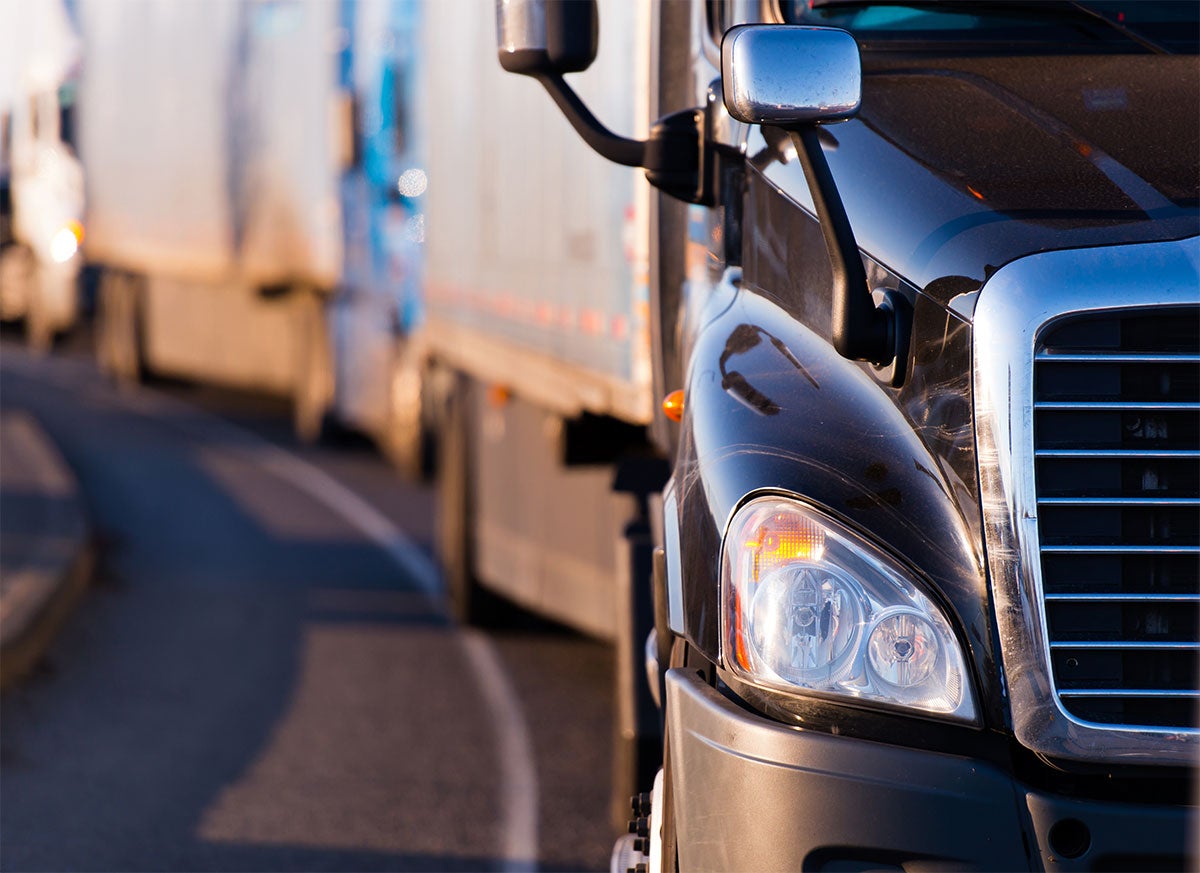
Sideswipe accidents occur when the side of a truck collides with the side of another vehicle while traveling adjacent to it. The impact force can push the struck vehicle out of its lane or off the road entirely, increasing the chance of additional collisions.
These accidents can occur for various reasons, such as improper lane changes, driver distraction, fatigue, or failure to check blind spots. Commercial trucks have large blind spots to their left and right side behind the side mirrors. If the driver fails to confirm the adjacent lane is open, they risk hitting the side of a vehicle next to them.
Wide-Turn Accidents
Wide-turn accidents are unfortunate and often entirely avoidable incidents that occur when a truck collides with a vehicle in the adjacent lane while making a turn. Due to their large size and turning radius, commercial trucks require extra space when executing turns. This is especially true when making right turns, as these involve a sharper angle.
Negligence in signaling, inadequate checking of blind spots, and misjudgment of the turning radius can contribute to wide-turn accidents. Furthermore, distractions, fatigue, inexperience, or aggressive driving can exacerbate the risk of these collisions.